DiskRaptor is a modern open source disk space analyzer designed to help you quickly understand what is consuming storage on your computer. Built with Rust and Tauri 2, it is positioned as a faster, more modern alternative to tools such as WinDirStat and DaisyDisk.

What makes DiskRaptor particularly interesting is its focus on handling very large file systems. The project uses native Rust scanning components and a virtual tree interface designed to remain responsive even when working with millions of files.

What Is DiskRaptor?

DiskRaptor is a cross platform disk usage analyzer for Windows, macOS, and Linux.

Its main purpose is simple. You select a drive or directory, let DiskRaptor scan it, and then explore which folders and files are consuming the most space.

The project is built with Rust and Tauri 2. The native scanning engine handles file system traversal while the interface runs inside the operating system's native webview. This keeps the application relatively lightweight compared with applications that bundle an entire Chromium runtime.

Fast Disk Scanning

Performance is one of DiskRaptor's main selling points.

The project uses a parallel scanning engine on macOS and a reliable walkdir-based engine on Windows and Linux. It is designed to handle drives containing millions of files, with the project documenting support for scans involving up to 20 million nodes.

Access denied folders are handled gracefully as well. Instead of completely stopping a scan because it encounters a protected directory, DiskRaptor logs the problem and continues scanning.

For users with large SSDs, hard drives, external drives, or development machines containing huge numbers of files, this approach can make a significant difference.

Virtual Tree View

DiskRaptor uses a virtual tree interface that renders only the items currently visible on screen.

This is important when working with extremely large directory structures. Loading millions of files into a conventional browser interface would quickly become impractical.

The project claims that its virtual tree can handle more than 10 million files while remaining responsive.

You can navigate through folders, inspect file sizes, and identify which directories are responsible for consuming storage.

Multiple Visualization Options

DiskRaptor doesn't rely on a single visualization.

It provides several ways to understand disk usage, including:

  • Pie charts

  • Squarified treemaps

  • Bar charts

  • Galaxy 3D visualization

The application also provides a Top 50 list of the largest files. Selecting an item in the visualization can take you directly to the corresponding location in the directory tree.

The treemap is particularly useful when you want a quick visual overview of a large drive.

Find Large Files

Finding large files is one of the most practical reasons to use a disk analyzer.

DiskRaptor highlights the largest files and allows you to inspect their location directly.

This can quickly reveal things such as old installers, virtual machine images, Docker data, video files, build artifacts, backups, and other files that have quietly consumed hundreds of gigabytes.

Duplicate File Detection

DiskRaptor also includes duplicate detection.

It uses content hashing with xxHash3 to identify files that contain the same data.

This is more useful than simply comparing filenames because files with different names can still contain identical content.

Duplicate detection can be particularly helpful for large collections of photographs, videos, archives, downloads, and project backups.

Empty Folder Finder

The application can identify empty directories and allow you to jump directly to them.

This is a relatively small feature, but it can be useful when cleaning up development directories, extracted archives, or old project structures.

File Search and Filtering

DiskRaptor provides search functionality for scanned results.

You can search by filename pattern and filter results by file type, including:

  • Images

  • Video

  • Audio

  • Archives

  • PDF files

This makes it easier to locate specific categories of files without manually navigating the entire directory tree.

File Management

DiskRaptor isn't purely a visualization tool.

Its context menus provide actions such as opening a file in Explorer or Finder, opening a terminal, viewing properties, copying a path, moving an item to the trash, and scanning a particular folder.

The ability to move files to the trash directly from the application makes cleanup considerably more convenient.

Because file deletion is potentially destructive, users should still verify what they are removing before performing cleanup operations.

Trash Recovery

Another useful feature is trash management.

DiskRaptor can browse items in the operating system's trash, restore them, or permanently delete them.

This gives the application some basic recovery functionality rather than treating deletion as a one way operation.

Reports and Export

DiskRaptor can export disk analysis results in several formats.

Supported options include:

  • HTML reports

  • CSV

  • JSON

The HTML report can be shared as a standalone report containing statistics and charts. CSV and JSON exports are useful when you want to process the results with another application or script.

This is particularly useful for administrators who need to document storage usage rather than simply inspect it interactively.

Cross Platform Support

DiskRaptor supports:

  • Windows

  • macOS

  • Linux

The project provides a Windows NSIS installer, a universal macOS binary supporting both Intel and Apple Silicon, and a DEB package for Debian and Ubuntu.

This makes it considerably more versatile than Windows-only disk analyzers.

Interface and Customization

The interface supports both dark and light modes, with the selected setting saved for future sessions.

It also supports 25 languages with automatic language detection and a language switcher.

Drag and drop is supported as well, allowing folders to be dragged from Explorer or Finder into DiskRaptor for scanning.

The interface also has resizable panels, keyboard navigation, and contextual menus.

Technology

DiskRaptor is built around Rust and Tauri 2.

The architecture separates the native layer from the interface. Rust handles scanning and native operations while JavaScript handles the user interface through the operating system's webview.

That means DiskRaptor does not need to ship its own Chromium browser engine.

On Windows it uses WebView2, macOS uses WKWebView, and Linux uses WebKitGTK.

For a disk utility that needs to remain responsive while processing very large directory trees, this is a sensible architecture.

Pros

  • Open source

  • Free to use

  • Windows, macOS, and Linux support

  • Built with Rust

  • Tauri 2 architecture

  • Fast directory scanning

  • Designed for millions of files

  • Virtual tree view

  • Treemap visualization

  • Pie charts

  • Bar charts

  • Galaxy 3D view

  • Top 50 largest files

  • Duplicate file detection

  • Empty folder detection

  • Filename search

  • File type filtering

  • Trash recovery

  • Direct file management

  • HTML report export

  • CSV export

  • JSON export

  • Dark and light modes

  • 25 languages

  • Drag and drop support

  • Apple Silicon support

Cons

  • The project is still relatively young

  • Some advanced features may need further refinement

  • Scanning very large drives can still consume substantial CPU and storage I/O

  • Deleting files directly from a disk analyzer requires caution

  • The visualization features may be more than users need for simple disk cleanup

  • Linux packaging currently focuses on DEB distributions

DiskRaptor vs WinDirStat

WinDirStat remains one of the best known Windows disk usage analyzers, but DiskRaptor takes a more modern approach.

DiskRaptor is cross platform, built with Rust and Tauri, supports multiple visualization modes, includes duplicate detection and trash recovery, and is designed around very large directory trees.

WinDirStat has the advantage of being a mature and well established Windows application.

For users who want a modern cross platform alternative, DiskRaptor is much more interesting.

DiskRaptor vs DaisyDisk

DaisyDisk is known for its polished macOS interface and strong visualization capabilities.

DiskRaptor brings a similar visual approach to Windows and Linux while also supporting macOS.

Its open source nature is another major difference.

For someone who wants a free and open source disk analyzer that works across multiple operating systems, DiskRaptor is a compelling alternative.

Who Should Use DiskRaptor?

DiskRaptor is a good choice for anyone who regularly needs to answer the question, "What is using all my disk space?"

It is especially useful for:

  • Developers

  • System administrators

  • Power users

  • NAS and storage users

  • Large media collections

  • Users managing external drives

  • People cleaning old project files

  • Anyone with a rapidly filling SSD

The large file and duplicate detection features are particularly useful for development machines where build artifacts, package caches, Docker files, virtual machines, and old repositories can accumulate surprisingly quickly.

Final Verdict

DiskRaptor is an impressive open source disk space analyzer with a clear focus on performance and usability.

Its Rust based scanning engine, virtual tree interface, multiple visualizations, duplicate detection, file filtering, and report export make it much more than a basic folder size viewer.

The cross platform support is another major advantage. You can use the same general workflow on Windows, macOS, and Linux rather than maintaining different disk analysis tools for each operating system.

The project is also under active development. The GitHub repository currently shows more than 800 commits, six open pull requests, and recent updates in August 2026.

It is still less mature than long established applications such as WinDirStat, so some users may encounter rough edges. Nevertheless, the architecture and feature set make DiskRaptor one of the more interesting modern alternatives in this category.

If you want a fast, open source, cross platform disk space analyzer, DiskRaptor is well worth trying.

DiskRaptor v1.0.42
Free
Software Informations:
Developer:

Operating System:
Windows / Linux / macOS
Date Added:
2026-09-29T14:03:35.316Z

GDevelop is an open source, cross-platform game engine that makes game development accessible without requiring traditional programming skills. It supports 2D, 3D, and multiplayer games and can export projects to the web, desktop, Android, iOS, Steam, and other platforms. Its event-based visual programming system, ready-made behaviors, extensive asset library, and optional AI assistance make it one of the most approachable game development tools available today.

GDevelop takes a different approach from traditional engines such as Unity or Unreal Engine. Instead of requiring developers to write large amounts of code, its event system lets users construct game logic using conditions and actions.

For example, a game rule can be expressed as a simple sequence of "If" and "Then" events. This makes the engine particularly approachable for beginners, educators, artists, and designers who want to create games without first learning a programming language.

At the same time, GDevelop is not limited to simple projects. JavaScript can be added when more advanced functionality is needed, while extensions and behaviors allow developers to expand the engine considerably.

Key Features of GDevelop

No-Code Game Development

The event system is the heart of GDevelop. Users can create gameplay mechanics visually by combining conditions and actions rather than writing traditional code.

This makes common tasks such as player movement, collisions, enemy behavior, scoring, menus, and object interactions considerably easier for beginners.

2D and 3D Game Development

GDevelop has expanded significantly beyond its original 2D focus. The current engine supports both 2D and 3D game development, with 3D rendering powered by Three.js alongside PixiJS for 2D graphics.

The newer 3D workflow includes an editor where developers can place objects and work with their game world more directly, making 3D development much more accessible than it was in earlier versions.

Ready-Made Behaviors

GDevelop includes a large collection of behaviors and extensions that provide common game functionality without requiring developers to build everything from scratch.

These can handle things such as platformer movement, physics, pathfinding, cameras, tweens, and other gameplay systems. The official website currently advertises more than 130 ready-made behaviors and extensions.

JavaScript Support

Although GDevelop is designed around no-code development, experienced developers are not restricted to the visual event system.

JavaScript can be used to extend gameplay logic, interact with APIs, access external data, and create functionality that is difficult to express entirely through events.

Multiplayer

GDevelop includes multiplayer capabilities and online services for games that require features such as player accounts, lobbies, and leaderboards.

This gives developers the ability to build more connected games without having to construct every backend service from scratch.

AI-Assisted Development

AI assistance has become part of the GDevelop workflow. The AI agent can help users create game logic, answer development questions, and accelerate prototyping.

The important part is that AI remains optional. Users can continue creating games entirely through the traditional GDevelop editor and event system.

Asset Store

GDevelop includes access to a large collection of ready-made assets and templates. The official platform currently lists more than 2,000 assets, including free resources and premium packs.

This is particularly useful for beginners who want to build a playable prototype without creating every visual asset themselves.

Cross-Platform Export

Games can be exported to multiple platforms, including:

  • Windows

  • macOS

  • Linux

  • Android

  • iOS

  • HTML5

  • Steam

  • Epic Games Store

  • Microsoft Store

This makes GDevelop useful for developers who want to release the same project across several platforms without maintaining completely separate codebases.

Download GDevelop v5.6.283 - Software Mirrors

GDevelop v5.6.283 for Windows

GDevelop-5-Setup-5.6.283.exe | 145.05 MB

GDevelop-5-5.6.283-win.zip | 192.76 MB

GDevelop v5.6.283 for macOS

GDevelop-5-5.6.283-universal.dmg | 266.85 MB

GDevelop-5-5.6.283-universal-mac.zip | 257.09 MB

GDevelop v5.6.283 for Linux

GDevelop-5-5.6.283.AppImage | 198.68 MB

GDevelop-5-5.6.283-linux.zip | 189.12 MB

GDevelop-5-5.6.283-arm64.AppImage | 198.99 MB

GDevelop v5.6.283 Source Code

GDevelop v5.6.283 Source code (zip)

GDevelop v5.6.283 Source code (tar.gz)

GDevelop v5.6.283 Release Notes:

🌤️ New, ready to use 2D/3D particle effects, skyboxes and fog

Effects can now be added from the Asset store, starting with 3D skyboxes and 3D fogs: | !3D Skyboxes | !3D Fog | |---|---| Many new 2D and 3D particle emitters are also available in the asset store: | !3D particle emitters | !3D particle emitters | |---|---| | !3D particle emitters | |---|

💝 Improvements

  • Multiple UI improvements:
* Preferences : redesigned preferences dialog and keyboard shortcuts, * Resources editor: allow selecting multiple resources and apply common actions (smooth image, delete), * Scene editor shortcuts now work without having to click on the canvas first.
  • Improved autocompletion and error messages based on variable types:
  • Autocompletion is available for bracket access on structures and arrays (MyVariable[...]).
  • Suggestions are now only showing variables with a relevant type.
  • Error messages are improved when brackets are left empty. An error message is also shown when a string, number or boolean variable is used where a structure or an array is expected (and vice versa).
  • Fixed autocompletion of variable parameters in function calls wrongly suggesting objects and functions.
  • Multiple improvements for the AI agent:
  • Files can now be attached to chat messages (and used in the game if needed),
  • The agent can now take and analyze screenshots of the game, making it more useful,
  • External layouts are now supported,
  • The agent can now read, create and modify extensions (custom functions, objects and behaviors). This is useful to create reusable, modular game logic or advanced objects.
  • Add a new action to tween the camera Z position
  • Add support for the m4a audio format
  • Performance improvements: textures embedded in 3D models are now shared in memory.
  • Geometries, materials and textures are also properly disposed of when an object is no longer used, avoiding memory leaks
  • Make "Enable AI for students" button more visible in the Education dashboard.

🐛 Bug fixes

  • Automatically opt out of iPad multitasking, which is required to publish on the App Store
  • Prevent the 3D platformer character from jumping again after falling off a platform
  • Fix .gdo imports missing objects and failing on some resources
  • Fix the object dialog overflowing on mobile
  • Fix nested variables being displayed as null in the debugger
  • The tween opacity action is now only shown for compatible objects
  • Fix sprite points being misaligned in previews when the system text size is increased
  • Fix the "has just been dragged" condition staying true when the behavior is deactivated
  • Fix the Escape key not correctly deselecting elements in the editor
  • Fix cloud project resources shown as error after using the editor for a long time.
  • Prevent locked instances from being deleted in the 3D editor
  • Prevent menu items from opening on drag (for instance, opening a scene while dragging it)
  • Special characters in resource names are now correctly encoded and decoded, and audio loading error messages are clearer
  • Warn and block code redemption when the subscription was purchased on mobile, as it can't be cancelled automatically

⚙️ Extensions

  • [Reviewed] [PlaygamaBridge] Post rewards and launch data for Social/Platform, Reddit, Samsung Instant Plays and Playgama Sandbox platforms
  • [Reviewed] [3D particle emitter] Add an emission zone radius
  • [Experimental] [Advanced 3D Features] Add split-screen for 3D scenes - Thanks @PANDAKO-GitHub!
  • Add an action to split the 3D scene view.
  • Add a behavior that renders a 3D camera view onto the texture of a 3D box.

🎨 Assets

  • Add ready-to-use particle emitters: 17 3D and 10 2D, plus 7 more covering the most common remaining needs
  • Add a new free 3D character model by ManNeko: Low Poly Girl
  • Add 4 new TopDown Action RPG Enemies packs: Pack 1, Pack 2, Pack 3 and Pack 4
  • Add 6 new pixel art packs by Barely Apes:

🕹 Premium Game Templates

  • Ludo: The classic board game, playable solo or with up to 4 players locally.
  • Monument Quizz: Guess how tall the monuments are.
  • The Open Wild: A simple 3D open world in the style of Red Dead Redemption.
  • Water Showcase: 9 new realistic water and lava objects, including pixel art and a toxic slime, all with multiple properties and an underwater color effect.
  • Kittydoku: A cozy, cat-themed take on Sudoku and Minesweeper, inspired by Meowdoku.

Performance and User Experience

GDevelop is one of the easier game engines to approach for someone without previous programming experience. The visual event system is intuitive, while the editor provides enough depth to support considerably more sophisticated projects.

The interface also benefits from ready-made behaviors and extensions. Instead of spending hours implementing basic systems, developers can attach existing functionality to game objects and focus more heavily on gameplay design.

Performance is another area where GDevelop has matured. Its engine uses technologies such as PixiJS and Three.js for rendering, while physics extensions include Box2D and Jolt Physics.

There are still limitations compared with highly specialized engines. Developers building extremely complex 3D games may eventually encounter areas where Unity, Unreal Engine, or Godot provide greater depth and control. However, that is not really GDevelop's primary goal.

Its strength is the balance between accessibility and capability.

Pros

  • Free and open source.

  • Excellent for beginners.

  • Supports 2D and 3D development.

  • Visual event-based programming.

  • JavaScript support for advanced users.

  • Large collection of behaviors and extensions.

  • AI-assisted development.

  • Multiplayer capabilities.

  • Large asset and template ecosystem.

  • Cross-platform export.

  • Can be used locally or through cloud-based workflows.

  • Games created with the engine can be distributed commercially without being forced to open source the game.

Cons

  • Advanced 3D development is not as mature as leading professional engines.

  • Visual event systems can become complicated in large projects.

  • Some cloud, publishing, and AI features are tied to paid plans.

  • Developers who prefer conventional programming may find the event system restrictive.

  • The ecosystem is smaller than Unity or Unreal.

Who Should Use GDevelop?

GDevelop is an excellent choice for beginners, indie developers, educators, students, artists, designers, and small teams.

It is especially useful when the goal is to turn a game idea into a working prototype quickly. Teachers can also use it to introduce game development without requiring students to learn a programming language first.

Experienced developers can benefit from the combination of visual events and JavaScript, making GDevelop more flexible than a typical no-code game maker.

Final Verdict

GDevelop has evolved into much more than a simple no-code game maker. Its combination of 2D and 3D capabilities, visual programming, JavaScript support, ready-made behaviors, multiplayer services, AI assistance, and broad export options makes it a surprisingly capable game development platform.

The biggest reason to choose GDevelop is its accessibility. You can start building a playable game without spending weeks learning programming or a complicated engine interface. As your project becomes more advanced, JavaScript and extensions provide an escape hatch when visual events are no longer enough.

For beginners and indie developers, GDevelop is one of the strongest open source game engines available. For experienced developers working on technically demanding 3D productions, more specialized engines may still be a better fit.

GDevelop v5.6.283
Free
Software Informations:
Developer:

Operating System:
Windows / macOS / Linux
Date Added:
2026-09-29T14:03:34.025Z

Discord is a cross-platform communication application that combines messaging, voice chat, video conferencing, and community management features into a single platform.

Users can create or join servers that contain:

  • Text channels

  • Voice channels

  • Video rooms

  • Community forums

  • Events

  • Announcements

  • Automated bots

Available on Windows, macOS, Linux, Android, iOS, and web browsers, Discord enables users to stay connected across multiple devices.

Discord has evolved from a gaming-focused voice chat application into one of the world's most popular communication platforms. Today, it serves millions of users across gaming communities, open-source projects, educational groups, businesses, creators, and online communities of every size.

Its combination of text chat, voice communication, video calls, screen sharing, and community management tools has made Discord a central hub for online collaboration and social interaction.

Key Features

Servers and Communities

Discord's server-based structure allows communities to organize discussions into dedicated channels.

A single server can contain:

  • General chat rooms

  • Support channels

  • Project discussions

  • Media sharing sections

  • Community announcements

  • Voice meeting rooms

This flexibility makes Discord suitable for both small groups and large communities.

Voice and Video Communication

Discord became popular because of its low-latency voice communication.

Users can:

  • Join voice channels instantly

  • Start video calls

  • Share screens

  • Stream games

  • Host community events

Voice quality is generally excellent, particularly on stable internet connections.

Screen Sharing and Streaming

The platform includes built-in screen sharing tools that allow users to:

  • Present applications

  • Stream gameplay

  • Conduct tutorials

  • Host remote meetings

  • Collaborate on projects

This functionality has become increasingly valuable for remote teams and online communities.

Community Management Tools

Discord offers powerful moderation capabilities including:

  • Permission systems

  • Role management

  • Channel restrictions

  • Automated moderation

  • Verification systems

  • Audit logs

These tools help administrators manage communities ranging from a few members to hundreds of thousands of users.

Bot Ecosystem

One of Discord's greatest strengths is its extensive bot ecosystem.

Bots can provide:

  • Moderation automation

  • Music playback

  • AI integrations

  • Custom commands

  • Community analytics

  • Support ticket systems

  • Event management

The availability of bots significantly expands the platform's functionality.

Cross-Platform Availability

Discord maintains a consistent experience across:

  • Windows

  • macOS

  • Linux

  • Android

  • iPhone

  • Web browsers

Messages and voice sessions synchronize seamlessly across devices.

User Experience

Discord strikes an excellent balance between simplicity and flexibility.

New users can quickly join conversations, while advanced users can take advantage of sophisticated community management features.

The interface is generally intuitive, although users joining large servers may initially find the channel structure overwhelming.

Recent updates have improved navigation, onboarding, and mobile usability.

Performance

Discord performs well across most modern devices.

The desktop application is built using Electron, which can consume more memory than native applications, but performance remains acceptable for the majority of users.

Voice calls, video communication, and messaging are generally reliable even in large communities.

Security and Privacy

Discord provides several security features, including:

  • Two-factor authentication

  • Account protection tools

  • Moderation systems

  • User blocking

  • Privacy controls

  • Community verification options

However, users should still exercise caution when joining public servers, interacting with unknown users, or installing third-party bots.

As with any large social platform, moderation quality varies significantly between communities.

Discord Nitro

Discord offers a premium subscription called Nitro that adds:

  • Higher upload limits

  • Enhanced streaming quality

  • Custom emojis across servers

  • Profile customization

  • Additional personalization features

The core platform remains fully functional without a subscription.

Use Cases

Discord works exceptionally well for:

  • Gaming communities

  • Open-source projects

  • Developer communities

  • Online education

  • Content creator communities

  • Fan groups

  • Study groups

  • Small business collaboration

  • Remote communities

Its flexibility is one of the primary reasons for its widespread adoption.

Limitations

Despite its strengths, Discord has some drawbacks.

Large servers can become difficult to navigate, and notification management may require careful customization.

The Electron-based desktop application also consumes more system resources than some competing messaging platforms.

Additionally, while Discord supports team collaboration, it is not a complete replacement for enterprise-focused workplace platforms in highly regulated business environments.

Pros

  • Excellent voice communication quality

  • Powerful community management tools

  • Extensive bot ecosystem

  • Cross-platform support

  • Reliable screen sharing and streaming

  • Free core functionality

  • Strong developer and gaming communities

  • Flexible server organization

Cons

  • Can be resource-intensive on older systems

  • Large servers may feel overwhelming

  • Notification management requires configuration

  • Not designed specifically for enterprise compliance

  • Some advanced features require Nitro

Who Should Use Discord?

Discord is ideal for:

  • Gamers

  • Developers

  • Open-source communities

  • Students

  • Content creators

  • Online communities

  • Remote groups

  • Hobbyist organizations

It is particularly valuable for groups that need a combination of messaging, voice communication, and community management within a single platform.

Discord has successfully transformed from a gaming chat application into one of the most versatile communication platforms available today. Its combination of voice communication, community management, streaming capabilities, and extensibility makes it suitable for an enormous range of use cases. While it may not replace specialized enterprise collaboration tools, it remains one of the best platforms for building and managing online communities.

Discord for Linux 1.0.160
Free
Software Informations:
Developer:

Operating System:
Linux
Date Added:
2026-09-29T13:59:46.881Z

Claude Desktop is Anthropic’s native Windows and macOS application for accessing Claude AI models including Haiku, Sonnet, and Opus. Unlike the browser version, the desktop app supports deeper local integration such as filesystem access, MCP server connectivity, and AI assisted workflows that interact directly with your machine.

Recent versions introduced more advanced features including parallel agent sessions, integrated terminals, file editors, workspace management, and experimental computer control capabilities.

Claude Desktop has evolved far beyond a simple chatbot client. Built by Anthropic, the desktop app now combines AI chat, coding assistance, automation tools, local file access, and agent style workflows into a single productivity platform.

For developers, researchers, writers, and advanced users, Claude Desktop is increasingly positioned as a serious alternative to browser based AI tools and even some traditional development workflows.

Key Features of Claude Desktop

  • Native Desktop Experience
    Claude Desktop launches faster than the web interface and feels more integrated into the operating system. Quick access shortcuts and persistent background operation improve workflow efficiency.

  • MCP Integration
    One of the biggest differentiators is support for MCP, or Model Context Protocol. This allows Claude to connect with tools like GitHub, Slack, Google Drive, local filesystems, and custom developer integrations.

  • Claude Code and Cowork Modes
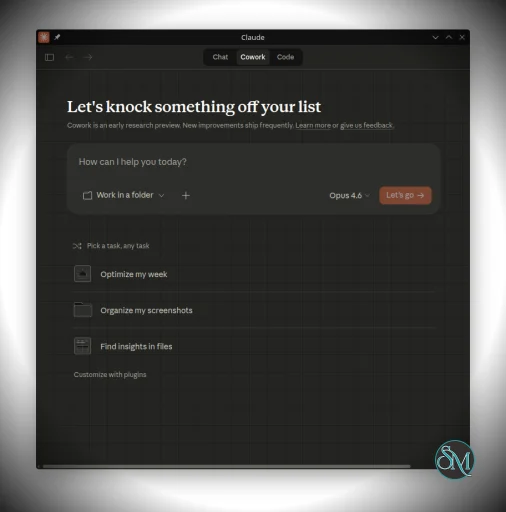
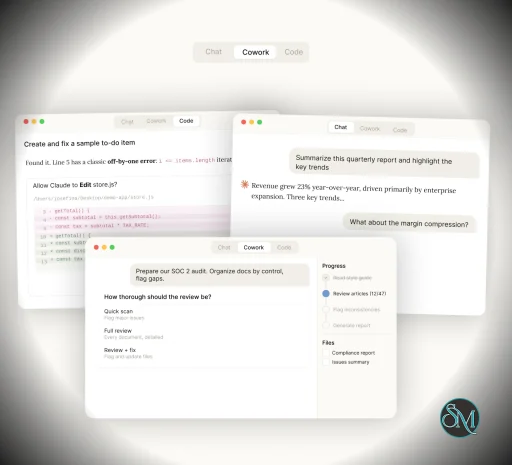
    Anthropic has expanded Claude Desktop into multiple workflow modes including coding assistance, research, and multi step automation. The newer Cowork and Claude Code systems allow deeper interaction with terminals, files, and development environments.

  • Parallel Sessions and Workspace Layouts
    The redesigned interface supports multiple simultaneous sessions with draggable workspace panels, integrated previews, and side chats.

  • Integrated Development Tools
    Recent versions now include built in terminals, file editing, diff viewing, and project management capabilities aimed directly at developers.

User Experience

Claude Desktop feels significantly more ambitious than most AI desktop apps. The interface is modern and productivity focused, especially for users handling research, coding, or long running AI assisted tasks.

For developers and power users, the workflow can become extremely efficient once configured properly with MCP tools and local integrations.

However, the app is becoming increasingly complex. New users may find the growing number of modes, integrations, and automation features overwhelming at first. Community discussions also show frustration with performance regressions and instability in recent releases.

Performance and Reliability

Performance is highly dependent on workload and system configuration.

On modern hardware, Claude Desktop generally performs well during normal chat and coding tasks. However, some users report increasing UI lag, heavy resource usage, session instability, and reconnect issues after recent feature expansions.

The CLI based Claude Code workflow is frequently described by developers as more stable than the full desktop UI for intensive coding tasks.

Privacy and Security

Claude Desktop introduces both powerful capabilities and additional security considerations.

The app can access local files, execute tools, and in some cases interact directly with the operating system. Anthropic has implemented multiple safeguards and permission systems, but researchers continue to study prompt injection and tool abuse risks in MCP enabled AI systems.

Anthropic’s newer computer control features are still considered experimental and currently work best on macOS.

Pros

  • Extremely powerful AI workflow capabilities

  • Native desktop integration with local tools

  • Strong developer focused features

  • MCP ecosystem support

  • Parallel sessions and workspace management

  • Fast evolving feature set

Cons

  • Increasing complexity for casual users

  • Performance and stability issues reported by some users

  • Usage limits can feel restrictive on certain plans

  • Advanced automation introduces security concerns

  • Some features remain macOS focused

Claude Desktop is ideal for developers, researchers, technical writers, analysts, and advanced productivity users who want deeper AI integration than browser chat interfaces can provide.

Users looking for simple casual AI conversations may find the browser version easier and more lightweight.

Claude Desktop is becoming one of the most capable AI desktop platforms available today. Its combination of local integrations, coding tools, automation workflows, and advanced AI features makes it incredibly powerful for serious users. While stability and complexity remain ongoing challenges, the platform’s capabilities already place it among the leading AI productivity applications on desktop systems.

Claude Desktop 2.9939.4
Free
Software Informations:
Developer:

Operating System:
Windows / macOS / Linux
Date Added:
2026-09-29T13:59:24.308Z

Icecream PDF Editor is a Windows based application developed by Icecream Apps that allows users to edit text, images, and pages inside PDF documents. The software includes tools for annotations, page management, and document editing within a simple interface.

It is designed mainly for personal users, students, and small businesses that need a straightforward PDF editing solution without the complexity of enterprise level tools.


Key Features of Icecream PDF Editor

Edit Text and Images in PDF

One of the core functions of Icecream PDF Editor is the ability to modify content directly inside a PDF file. Users can:

  • Edit or replace text

  • Add new text elements

  • Insert or remove images

  • Change fonts and formatting

These features allow users to update documents without converting them to other formats.


Annotation and Markup Tools

Icecream PDF Editor includes several annotation tools that help users review or comment on documents. These tools include:

  • Highlighting text

  • Adding comments and notes

  • Drawing shapes and arrows

  • Underlining important sections

Annotations are useful for reviewing reports, editing drafts, or collaborating on documents.


Page Management Tools

Users can organize PDF documents using built in page management features. These include:

  • Reordering pages

  • Deleting unwanted pages

  • Rotating pages

  • Adding new blank pages

Page management tools help restructure documents quickly without external software.


Password Protection and Security

The software allows users to apply password protection to PDF files. This helps prevent unauthorized access to confidential documents and restrict editing or printing.


Simple and User Friendly Interface

Icecream PDF Editor is designed with a clean layout that makes navigation easy. Most tools are accessible from a toolbar, which reduces the learning curve for beginners.

Because of its simple interface, users can quickly start editing PDF files without advanced training.


Performance and Usability

The software generally performs well for everyday tasks such as editing text, adding annotations, or reorganizing pages. It is compatible with multiple versions of Windows and works on most standard systems.

However, performance may slow down when working with very large or complex PDF files. Some users have reported occasional lag or stability issues during heavy editing tasks.


Pros and Cons

Advantages

  • Easy to use interface

  • Direct editing of PDF text and images

  • Useful annotation tools

  • Page management features

  • Affordable compared to many professional PDF editors

Limitations

  • Available only for Windows systems

  • Limited advanced features such as OCR

  • Free version has restricted functionality

  • Some performance issues may occur with large documents

Because of these limitations, advanced users may require more powerful professional PDF editing tools.


Who Should Use Icecream PDF Editor

Icecream PDF Editor is suitable for:

  • Students editing assignments and research documents

  • Office workers reviewing reports and contracts

  • Small businesses managing PDF files

  • Individuals looking for a simple alternative to complex PDF editing software

It works best for users who need quick editing and annotation features rather than advanced document processing.


Final Verdict

Icecream PDF Editor is a practical and user friendly PDF editing solution for Windows users. With features such as text editing, annotations, page management, and document protection, it covers most everyday PDF tasks.

Although it lacks some advanced capabilities found in professional PDF editors, it remains a solid option for users who want a simple and affordable tool to edit and manage PDF files efficiently.

Managing and editing PDF documents is a common task for students, businesses, and professionals. Icecream PDF Editor is a desktop application designed to help users edit, annotate, and manage PDF files without complicated tools or cloud services.

Icecream PDF Editor 3.32 PRO - Lifetime - Discount 23% OFF
$99$129
Software Informations:
Developer:

Operating System:
Windows
Date Added:
2026-09-29T12:03:39.269Z

Discord is a cross-platform communication application that combines messaging, voice chat, video conferencing, and community management features into a single platform.

Users can create or join servers that contain:

  • Text channels

  • Voice channels

  • Video rooms

  • Community forums

  • Events

  • Announcements

  • Automated bots

Available on Windows, macOS, Linux, Android, iOS, and web browsers, Discord enables users to stay connected across multiple devices.

Discord has evolved from a gaming-focused voice chat application into one of the world's most popular communication platforms. Today, it serves millions of users across gaming communities, open-source projects, educational groups, businesses, creators, and online communities of every size.

Its combination of text chat, voice communication, video calls, screen sharing, and community management tools has made Discord a central hub for online collaboration and social interaction.

Key Features of Discord

Servers and Communities

Discord's server-based structure allows communities to organize discussions into dedicated channels.

A single server can contain:

  • General chat rooms

  • Support channels

  • Project discussions

  • Media sharing sections

  • Community announcements

  • Voice meeting rooms

This flexibility makes Discord suitable for both small groups and large communities.

Voice and Video Communication

Discord became popular because of its low-latency voice communication.

Users can:

  • Join voice channels instantly

  • Start video calls

  • Share screens

  • Stream games

  • Host community events

Voice quality is generally excellent, particularly on stable internet connections.

Screen Sharing and Streaming

The platform includes built-in screen sharing tools that allow users to:

  • Present applications

  • Stream gameplay

  • Conduct tutorials

  • Host remote meetings

  • Collaborate on projects

This functionality has become increasingly valuable for remote teams and online communities.

Community Management Tools

Discord offers powerful moderation capabilities including:

  • Permission systems

  • Role management

  • Channel restrictions

  • Automated moderation

  • Verification systems

  • Audit logs

These tools help administrators manage communities ranging from a few members to hundreds of thousands of users.

Bot Ecosystem

One of Discord's greatest strengths is its extensive bot ecosystem.

Bots can provide:

  • Moderation automation

  • Music playback

  • AI integrations

  • Custom commands

  • Community analytics

  • Support ticket systems

  • Event management

The availability of bots significantly expands the platform's functionality.

Cross-Platform Availability

Discord maintains a consistent experience across:

  • Windows

  • macOS

  • Linux

  • Android

  • iPhone

  • Web browsers

Messages and voice sessions synchronize seamlessly across devices.

User Experience

Discord strikes an excellent balance between simplicity and flexibility.

New users can quickly join conversations, while advanced users can take advantage of sophisticated community management features.

The interface is generally intuitive, although users joining large servers may initially find the channel structure overwhelming.

Recent updates have improved navigation, onboarding, and mobile usability.

Performance

Discord performs well across most modern devices.

The desktop application is built using Electron, which can consume more memory than native applications, but performance remains acceptable for the majority of users.

Voice calls, video communication, and messaging are generally reliable even in large communities.

Security and Privacy

Discord provides several security features, including:

  • Two-factor authentication

  • Account protection tools

  • Moderation systems

  • User blocking

  • Privacy controls

  • Community verification options

However, users should still exercise caution when joining public servers, interacting with unknown users, or installing third-party bots.

As with any large social platform, moderation quality varies significantly between communities.

Discord Nitro

Discord offers a premium subscription called Nitro that adds:

  • Higher upload limits

  • Enhanced streaming quality

  • Custom emojis across servers

  • Profile customization

  • Additional personalization features

The core platform remains fully functional without a subscription.

Use Cases

Discord works exceptionally well for:

  • Gaming communities

  • Open-source projects

  • Developer communities

  • Online education

  • Content creator communities

  • Fan groups

  • Study groups

  • Small business collaboration

  • Remote communities

Its flexibility is one of the primary reasons for its widespread adoption.

Limitations

Despite its strengths, Discord has some drawbacks.

Large servers can become difficult to navigate, and notification management may require careful customization.

The Electron-based desktop application also consumes more system resources than some competing messaging platforms.

Additionally, while Discord supports team collaboration, it is not a complete replacement for enterprise-focused workplace platforms in highly regulated business environments.

Pros

  • Excellent voice communication quality

  • Powerful community management tools

  • Extensive bot ecosystem

  • Cross-platform support

  • Reliable screen sharing and streaming

  • Free core functionality

  • Strong developer and gaming communities

  • Flexible server organization

Cons

  • Can be resource-intensive on older systems

  • Large servers may feel overwhelming

  • Notification management requires configuration

  • Not designed specifically for enterprise compliance

  • Some advanced features require Nitro

Who Should Use Discord?

Discord is ideal for:

  • Gamers

  • Developers

  • Open-source communities

  • Students

  • Content creators

  • Online communities

  • Remote groups

  • Hobbyist organizations

It is particularly valuable for groups that need a combination of messaging, voice communication, and community management within a single platform.

Discord has successfully transformed from a gaming chat application into one of the most versatile communication platforms available today. Its combination of voice communication, community management, streaming capabilities, and extensibility makes it suitable for an enormous range of use cases. While it may not replace specialized enterprise collaboration tools, it remains one of the best platforms for building and managing online communities.

Discord for macOS 0.0.414
Free
Software Informations:
Developer:

Operating System:
macOS
Date Added:
2026-09-29T12:03:33.840Z

FreeCAD is a free and open source parametric CAD software developed by the FreeCAD Project. It is designed for creating 3D models of real life objects, with a focus on mechanical engineering, product design, and architecture.

The software uses parametric modeling, allowing users to modify designs by adjusting parameters rather than recreating models from scratch.

3D modeling and CAD software are essential for engineers, designers, and hobbyists working on technical projects. FreeCAD is a powerful open source parametric 3D modeling application that provides advanced design tools without the cost of commercial CAD software.

Download FreeCAD 1.1.4 - Software Mirrors

FreeCAD 1.1.4 for Windows

FreeCAD_1.1.4-Windows-x86_64-py311.7z | 398.72 MB

FreeCAD_1.1.4-Windows-x86_64-py311-installer.exe | 495.26 MB

FreeCAD 1.1.4 for macOS

FreeCAD_1.1.4-macOS-x86_64-py311.dmg | 686.7 MB

FreeCAD_1.1.4-macOS-arm64-py311.dmg | 619.66 MB

FreeCAD 1.1.4 for Linux

FreeCAD_1.1.4-Linux-x86_64-py311.AppImage | 782.79 MB

FreeCAD_1.1.4-Linux-aarch64-py311.AppImage | 720.59 MB

Others Download related to FreeCAD 1.1.4

freecad_source_1.1.4.tar.gz | 93.65 MB

FreeCAD 1.1.4 Source Code

FreeCAD 1.1.4 Source code (zip)

FreeCAD 1.1.4 Source code (tar.gz)

FreeCAD 1.1.4 Release Notes:

FreeCAD 1.1.4 is the last planned maintenance release in the 1.1.x series. It includes two security fixes addressing file-handling vulnerabilities that can be triggered by opening a maliciously crafted FCStd file. All previously-released versions are affected by these issues, so we strongly recommend that all users upgrade, especially anyone who opens FreeCAD files from untrusted or unknown sources.

How to download

The assets section below is automatically populated as the builds complete: if you don't see a download for your system, please be patient, the builds can take several hours to complete. Windows and macOS builds are signed by The FreeCAD project association AISBL.

What's Changed

Full Changelog: 1.1.3...1.1.4

Key Features

Parametric Modeling

FreeCAD’s core feature is parametric design.

Users can:

  • Modify dimensions and constraints at any time

  • Recalculate models automatically

  • Maintain design history

This makes it ideal for engineering workflows where precision and iteration are important.


Modular Workbench System

FreeCAD uses a workbench based interface, where each module is designed for a specific task.

Examples include:

  • Part Design for solid modeling

  • Draft for 2D drawing

  • Arch for architectural modeling

  • Path for CNC machining

This modular approach allows users to focus on specific workflows.


Sketcher Tool

The Sketcher workbench enables users to create 2D sketches that serve as the foundation for 3D models.

Features include:

  • Geometric constraints

  • Dimensional constraints

  • Fully parametric sketches

This is a critical component for precise modeling.


3D Modeling and Assembly

FreeCAD supports complex 3D modeling and assembly creation.

Users can:

  • Combine multiple parts

  • Simulate assemblies

  • Analyze mechanical relationships

This makes it suitable for engineering and product design.


File Format Support

FreeCAD supports a wide range of file formats:

  • STEP

  • IGES

  • STL

  • OBJ

  • DXF

This ensures compatibility with other CAD tools and workflows.


Python Scripting

FreeCAD includes built in Python support, allowing users to:

  • Automate tasks

  • Create custom tools

  • Extend functionality

This is especially useful for advanced users and developers.


Open Source and Customizable

Being open source, FreeCAD allows:

  • Full transparency

  • Community driven development

  • Custom modifications and plugins


Performance and Usability

FreeCAD is a powerful tool but comes with a learning curve.

Performance characteristics:

  • Handles complex models reasonably well

  • Performance depends on hardware and project size

  • May feel less optimized compared to commercial CAD software

Usability considerations:

  • Interface can feel complex for beginners

  • Documentation and tutorials help but require time to learn


Pros and Cons

Advantages

  • Free and open source

  • Powerful parametric modeling

  • Cross platform support

  • Modular workbench system

  • Python scripting for automation

  • Wide file format compatibility


Limitations

  • Steep learning curve for beginners

  • Interface is less polished than commercial tools

  • Performance can vary with large assemblies

  • Some features still under development


Who Should Use FreeCAD

FreeCAD is ideal for:

  • Engineers and product designers

  • Students learning CAD

  • Makers and hobbyists

  • Developers needing customizable CAD tools

  • Users seeking a free alternative to paid CAD software


Final Verdict

FreeCAD is a highly capable and flexible CAD application that offers powerful parametric modeling tools at no cost. While it may require time to learn, its extensive features and open source nature make it an excellent choice for engineering and design projects.

For users looking for a free and customizable CAD solution, FreeCAD is one of the best options available.

FreeCAD 1.1.4
Free
Software Informations:
Developer:

Operating System:
Windows / macOS / Linux
Date Added:
2026-09-29T11:04:03.159Z

Claude Desktop for Linux is an open source project that brings Anthropic's Claude Desktop application to Linux by repackaging the official Windows release into native Linux packages. Developed by aaddrick, the project supports Debian, Ubuntu, Fedora, Arch Linux, NixOS, and other distributions through native packages and AppImages, making it one of the most polished ways to use Claude Desktop on Linux.

Although Anthropic does not currently provide an official Linux version of Claude Desktop, this project fills that gap by packaging the official application into Linux-native formats while preserving nearly all of its functionality.

Unlike running Claude through Wine or a virtual machine, Claude Desktop for Linux integrates directly with the operating system, providing native desktop integration, automatic updates through package managers, and full support for the Model Context Protocol (MCP).

It is important to note that this is an unofficial community project and is not affiliated with Anthropic.

Key Features of Claude Desktop for Linux

Native Linux Packages

The project distributes Claude Desktop as native packages for multiple Linux distributions, including:

  • Debian and Ubuntu (.deb)

  • Fedora and RHEL (.rpm)

  • Universal AppImage

This allows installation using each distribution's standard package management system.

Full MCP Support

One of the biggest advantages is complete support for the Model Context Protocol. Users can configure MCP servers using the same configuration file as the official desktop application, enabling integrations with local tools, databases, development environments, and custom workflows.

Desktop Integration

The application behaves like a native Linux program with features such as:

  • System tray integration

  • Desktop launcher

  • Global keyboard shortcuts

  • File associations

  • Native notifications

These small details make daily use feel much more polished than unofficial compatibility layers.

Automatic Updates

Users installing through the provided repositories receive updates through their normal package manager, making maintenance simple without manually downloading new releases. The project recently migrated to a dedicated package repository to improve distribution reliability.

Cross-Distribution Support

Rather than targeting only Ubuntu, the project actively supports multiple Linux ecosystems, making it accessible to a wide range of users.

Open Source

All packaging scripts and Linux-specific modifications are publicly available, allowing users to inspect the build process and contribute improvements.

Download Claude Desktop for Linux v3.3.0+claude2.9939.4 - Software Mirrors

Claude Desktop for Linux v3.3.0+claude2.9939.4 for Linux

claude-desktop_2.9939.4_arm64.deb | 161.19 MB

claude-desktop_2.9939.4_amd64.deb | 167.5 MB

claude-desktop_1.16000.0-1_all.deb | 626 B

claude-desktop-unofficial_2.9939.4-3.3.0_arm64.deb | 179.13 MB

claude-desktop-unofficial_2.9939.4-3.3.0_amd64.deb | 181.17 MB

claude-desktop-unofficial-2.9939.4-3.3.0-arm64.AppImage.zsync | 406.75 kB

claude-desktop-unofficial-2.9939.4-3.3.0-arm64.AppImage | 232.27 MB

claude-desktop-unofficial-2.9939.4-3.3.0-amd64.AppImage.zsync | 408.87 kB

claude-desktop-unofficial-2.9939.4-3.3.0-amd64.AppImage | 233.48 MB

claude-desktop-unofficial-2.9939.4-3.3.0-1.x86_64.rpm | 181.54 MB

claude-desktop-unofficial-2.9939.4-3.3.0-1.aarch64.rpm | 179.6 MB

Others Download related to Claude Desktop for Linux v3.3.0+claude2.9939.4

reference-source.tar.gz | 22.45 MB

Claude Desktop for Linux v3.3.0+claude2.9939.4 Source Code

Claude Desktop for Linux v3.3.0+claude2.9939.4 Source code (zip)

Claude Desktop for Linux v3.3.0+claude2.9939.4 Source code (tar.gz)

Claude Desktop for Linux v3.3.0+claude2.9939.4 Release Notes:

Claude Desktop Update

This release updates the packaged Claude Desktop version to 2.9939.4.

What's Changed

  • Updated Claude Desktop to version 2.9939.4

Installation

APT (Debian/Ubuntu)

bash

First time? Add the repo:

curl -fsSL https://pkg.claude-desktop-debian.dev/KEY.gpg | sudo gpg --dearmor -o /usr/share/keyrings/claude-desktop-unofficial.gpg echo "deb [signed-by=/usr/share/keyrings/claude-desktop-unofficial.gpg arch=amd64,arm64] https://pkg.claude-desktop-debian.dev stable main" | sudo tee /etc/apt/sources.list.d/claude-desktop-unofficial.list

Install or update:

sudo apt update && sudo apt install claude-desktop-unofficial

DNF (Fedora/RHEL)

bash

First time? Add the repo:

sudo curl -fsSL https://pkg.claude-desktop-debian.dev/rpm/claude-desktop-unofficial.repo -o /etc/yum.repos.d/claude-desktop-unofficial.repo

Install or update:

sudo dnf install claude-desktop-unofficial

AUR (Arch Linux)

bash
yay -S claude-desktop-appimage

Manual Download

Download .deb, .rpm, or .AppImage from the assets below.

Performance and User Experience

Claude Desktop for Linux feels remarkably close to a native application. Installation is straightforward, especially on Debian and Ubuntu systems using the official package repository.

Performance is responsive, startup times are reasonable, and the interface closely matches the official Windows and macOS versions. MCP support, one of the primary reasons many developers choose the desktop client, works well and has become one of the project's strongest features. Community feedback has generally been positive, with users praising both stability and Linux integration.

Because the project closely follows upstream Claude Desktop releases, Linux users typically receive updated packages soon after new official versions become available.

Pros

  • Free and open source.

  • Excellent Linux integration.

  • Full Model Context Protocol support.

  • Native packages for multiple distributions.

  • Automatic updates through package managers.

  • System tray and global shortcut support.

  • Active development with frequent updates.

  • No need for Wine or virtualization.

Cons

  • Not officially supported by Anthropic.

  • Compatibility depends on upstream Claude Desktop releases.

  • Occasionally requires updates after major Claude Desktop changes.

  • Some enterprise environments may prefer officially supported software.

Who Should Use Claude Desktop for Linux?

Claude Desktop for Linux is an excellent choice for developers, DevOps engineers, researchers, writers, and Linux enthusiasts who want the full Claude Desktop experience without leaving their preferred operating system.

It is particularly valuable for users who rely on MCP servers for coding assistants, local automation, or custom AI workflows.

Final Verdict

Claude Desktop for Linux is arguably the most complete unofficial Linux implementation of Claude Desktop available today. Its native packaging, excellent desktop integration, automatic updates, and full MCP compatibility make it feel much closer to an official Linux release than a community workaround.

While it is not maintained by Anthropic, the project's active development and rapid updates make it a reliable solution for Linux users who want access to Claude Desktop's full capabilities.

Claude Desktop for Linux v3.3.0+claude2.9939.4
Free
Software Informations:
Developer:

Operating System:
Linux
Date Added:
2026-09-29T11:03:33.010Z